Riding an electric scooter in Saigon’s rainy season: what to know
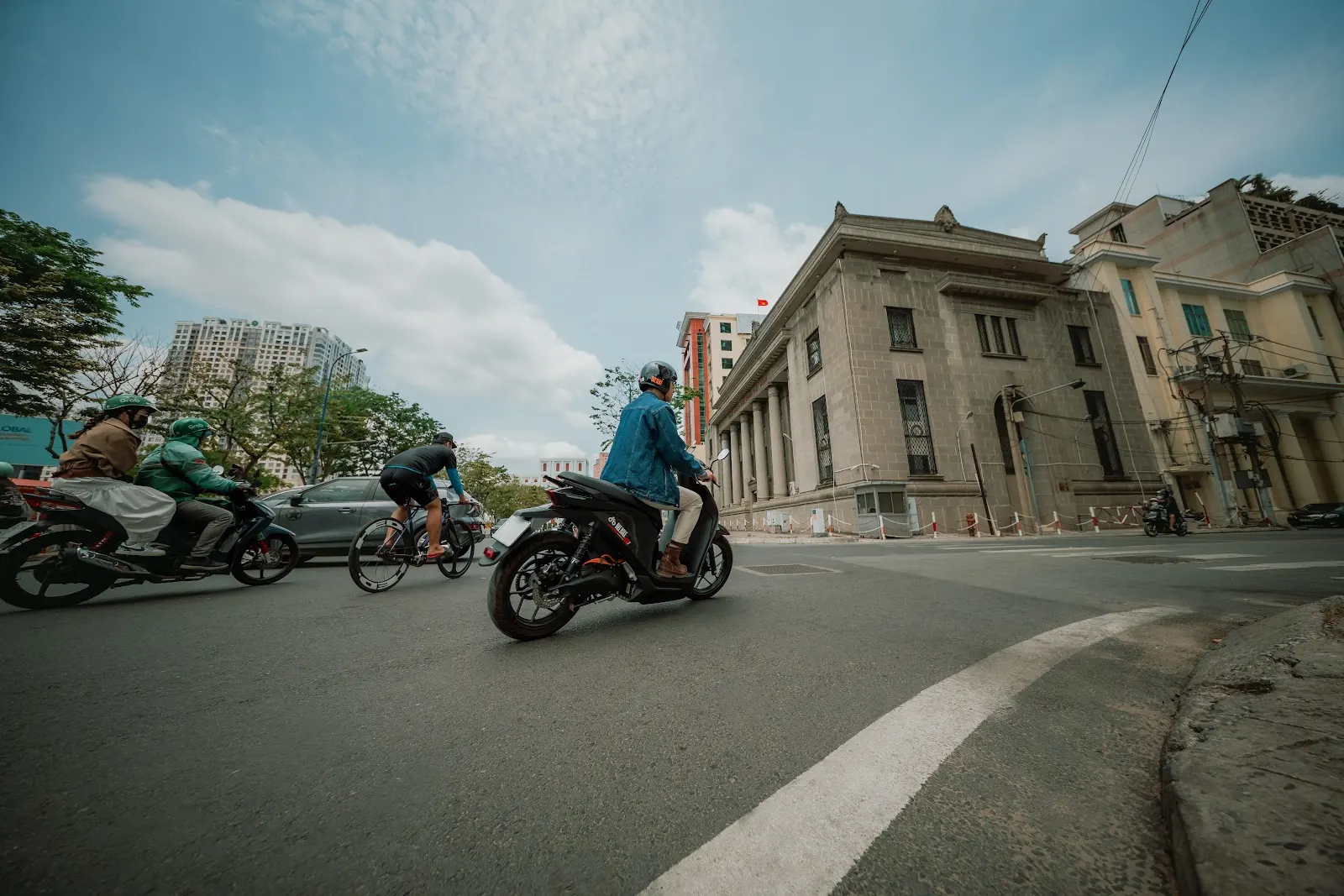
Afternoon downpours, high tides and flooded streets are part of daily life in Saigon. The question we hear most at the showroom: “Will an electric scooter short-circuit in a flood?” Here’s the full answer.
What does IP67 mean?
IP is the international rating for dust and water resistance. With IP67:
- 6: fully dust-tight.
- 7: withstands immersion in up to 1 metre of water for 30 minutes (lab test, still water).
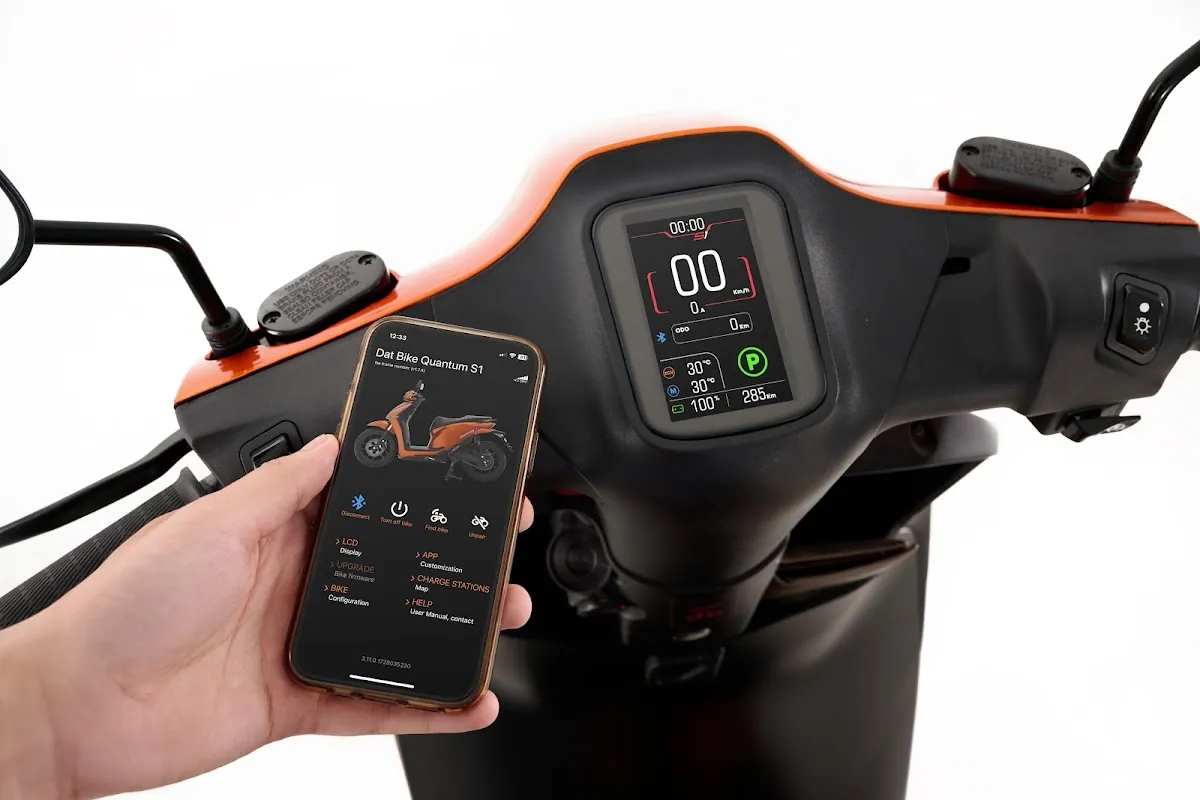
On the Quantum S range, the motor, battery, main charger and controller (ECU) are IP67, and other parts are IP65 (protected against water jets from any direction). Put simply: the most expensive parts get the most protection.
So how deep is safe?
IP67 is measured in still water. On the street, water has waves, currents, rubbish and mud. So leave yourself a safety margin:
How to ride through a flooded stretch
- Look before you go inWatch the vehicles ahead to judge the depth. Stay away from the kerb, where drain covers are often missing or lifted.
- Go slowly, keep the throttle steadyLow speed avoids pushing a wave of water up over the bike. Electric scooters have no exhaust, so they can’t “swallow water” like petrol bikes, but you still shouldn’t rush.
- Don’t stop in the middleEspecially when cars coming the other way are making waves.
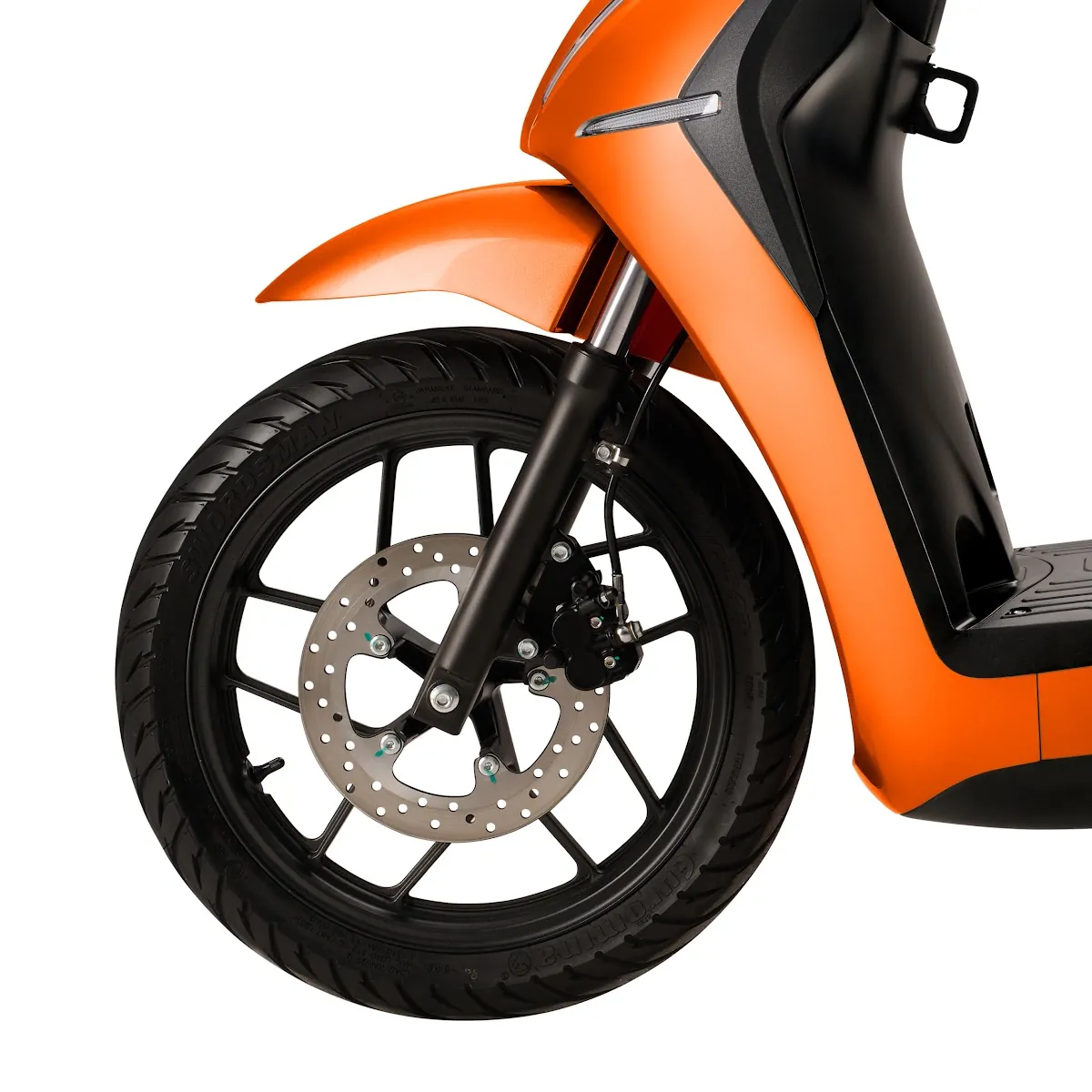
- Test your brakes afterwardsWet brake pads grip less. Squeeze the brakes gently a few times while riding slowly to dry them.
Riding in the rain: 5 safety tips
- Slow down and keep twice the distance you would on a dry road.
- Avoid hard braking on painted lines, manhole covers and rails. They’re very slippery.
- Turn your lights on so other vehicles can see you.
- Electric scooters accelerate quickly. Use a gentle throttle on slippery roads so the rear wheel doesn’t spin.
- Only use cruise control on open roads, never in heavy rain or traffic.
What to do after riding through rain or floods
- If you rode through tidal flooding (brackish, salty water): rinse the bike with clean water the same day, especially the underside, brakes and chain.
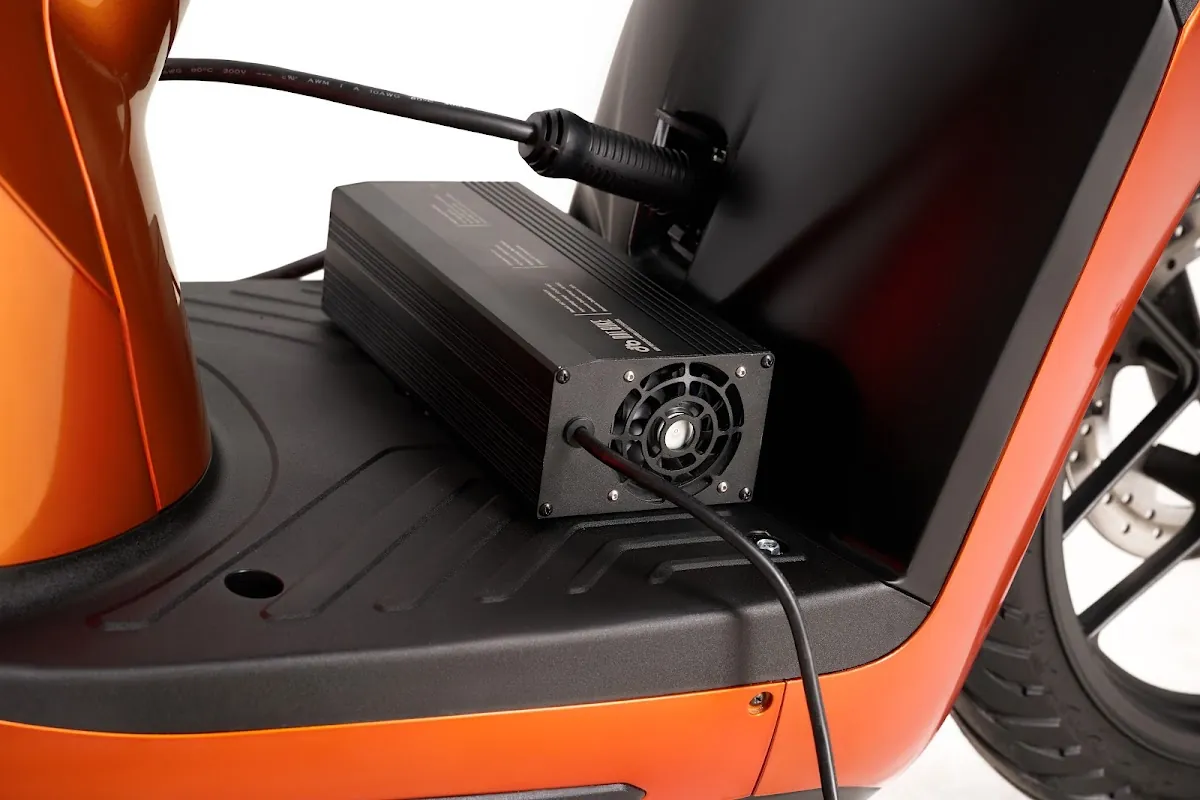
- Dry the charging port and let it dry out before plugging in. Don’t charge outdoors while it’s raining.
- Open the storage compartment to check for standing water and leave it open to dry.
- Re-lubricate the chain (Quantum S) after several rainy days in a row.
When should I bring the bike in?
Get in touch straight away if the bike shows an error on the display, won’t power on, the throttle feels jerky, or you’ve ridden through water above the footboard. Don’t keep trying to restart it. Call 081 820 3839 and a technician will advise you.